On March 2, 2026, at Thai Nguyen University of Agriculture and Forestry (TUAF) held a working session with a delegation from Kagoshima University (Japan) to discuss and promote cooperation orientations in forestry and sustainable development.
During the meeting, the Institute of Forest Science (IFS) played a central role in professional discussions and in proposing strategic directions for collaboration.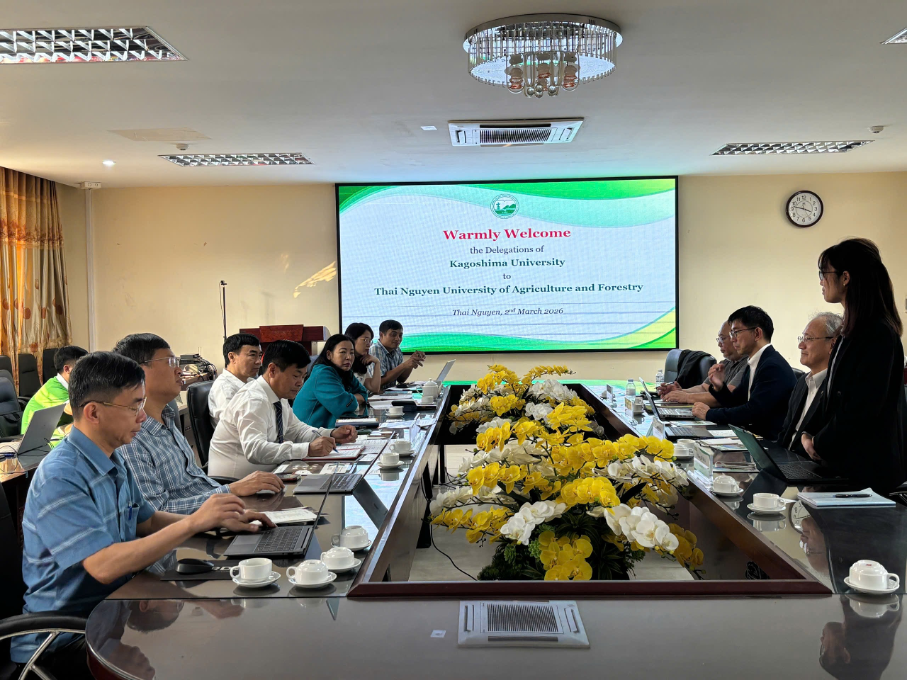
Overview of the working session between the Kagoshima University delegation and representatives of Thai Nguyen University of Agriculture and Forestry.
Speaking at the meeting, Prof. Dr. Tran Thi Thu Ha – Director of the Institute of Forest Science emphasized the importance of strengthening international cooperation in the context of Vietnam’s forestry sector transitioning toward higher value-added production, large-diameter timber development, and sustainable forest management.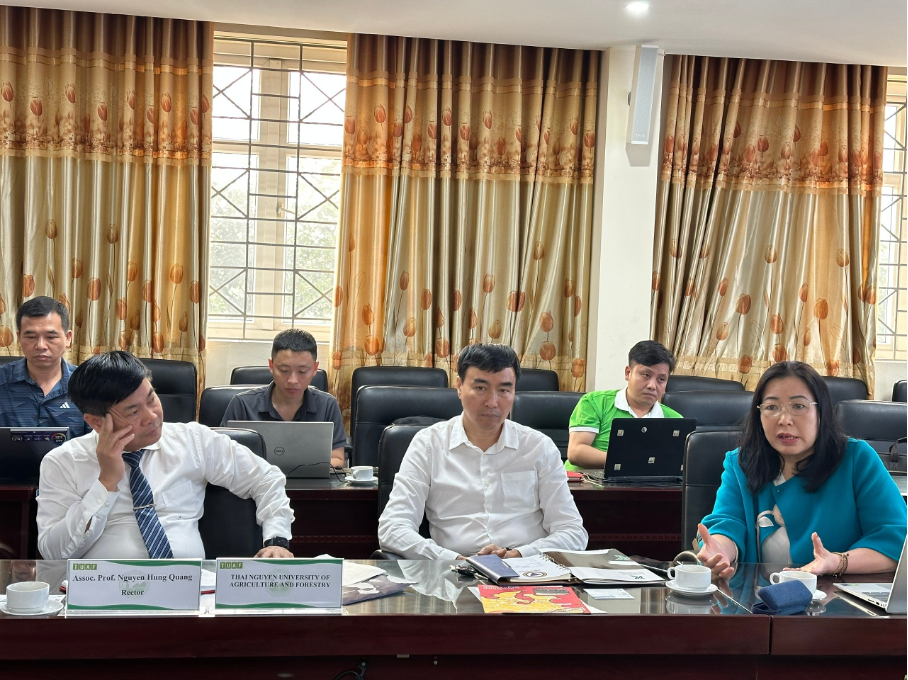
Prof. Dr. Tran Thi Thu Ha affirmed that the application of advanced technologies such as LiDAR, laser scanning, and unmanned aerial vehicles (drones) in forest resource monitoring is an inevitable trend, particularly suitable for the mountainous terrain of Northern Vietnam. She also highlighted the urgent need for high-quality human resource training to support sustainable forest management and the transition from small-diameter to large-diameter timber production.
Under the direction of Prof. Dr. Tran Thi Thu Ha, the Institute proactively proposed key areas of cooperation, including:
-
Application of LiDAR technology for biomass estimation and forest monitoring;
-
Collaborative research on improved Acacia varieties for saw timber production and enhanced climate resilience;
-
Development of medicinal plants under natural forest canopies in association with economic, social, and environmental sustainability;
-
Supporting enterprises and forest growers in obtaining sustainable forest management certifications such as FSC/PEFC to enhance export value.
Expanding Research and Training Cooperation
During the session, Kagoshima University introduced its research on woody biomass utilization in Japan and the application of terrestrial laser scanning and LiDAR in forest planning. Both sides engaged in in-depth discussions on potential collaboration in forest carbon credit research, plantation improvement, and student exchange programs.
The Japanese delegation highly appreciated the Institute’s proactive role, professional capacity, and clear development orientation in linking research, training, and industry.
The meeting marked an important initial step toward concretizing international cooperation directions, contributing to enhancing the Institute’s position within regional and international forestry research networks.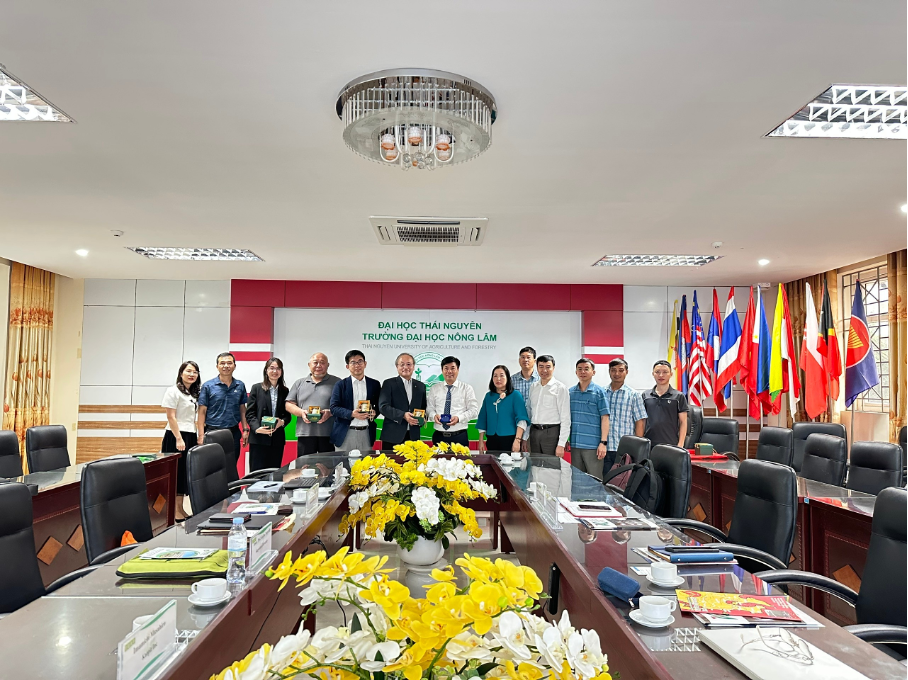
Representatives of Thai Nguyen University of Agriculture and Forestry and Kagoshima University taking a commemorative photo.