Scientific name: Codonopsis pilosula (Franch.) Nannf.
Family: Campanulaceae
Botanical Description
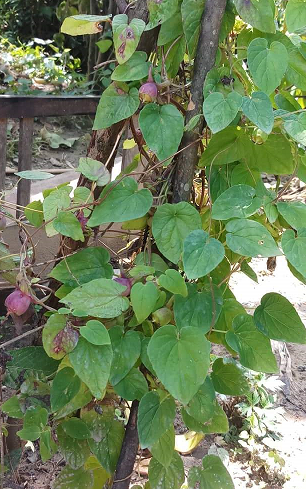
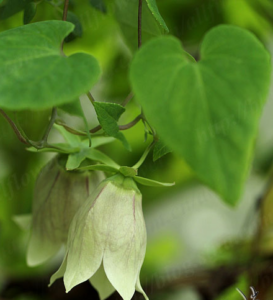
Northern Codonopsis is a long-lived perennial species, typically found along streambanks and within sparse forests under the canopy of large trees. It is a dense, climbing herbaceous plant with twining stems, heart-shaped leaves, and bell-shaped green flowers with five petal lobes that bear purplish or yellowish veins. The plant may reach heights of 2.4–3 meters, with roots ranging from 10–45 cm in length and 1–3 cm in diameter.
Ecological Adaptation and Distribution
Northern Codonopsis thrives in cool climates year-round, commonly found on the edges of secondary forests and in grassy savannas at elevations of 900–2,200 meters. Ideal temperature range is 18–25°C, with annual rainfall around 1,500 mm. Suitable soil conditions include well-drained, humus-rich, nutrient-dense, and friable soils located on gently sloping hillsides, terraced fields, or elevated paddies.
The species is native to northeastern Asia and the Korean Peninsula and is now distributed throughout China, Japan, and Taiwan. In China, it grows both wild and cultivated, especially in Sichuan, Gansu, Shanxi, Yunnan, Shaanxi, Jilin, Heilongjiang, Hubei, Guizhou, Henan, Ningxia, Qinghai, and Liaoning provinces. In Vietnam, it is found in mountainous areas such as Lạng Sơn, Cao Bằng, Lào Cai, and Hà Giang.
Phytochemistry and Medicinal Uses
Northern Codonopsis contains biologically active compounds such as polysaccharides, phenylpropanoids, alkaloids, and triterpenoids (Chen et al., 2013). It is used to improve digestive function, boost the immune system, enhance stamina, and help regulate blood pressure (Chen et al., 2013).
Propagation and Nursery Techniques
The species can be propagated both sexually and asexually, including by stem cuttings or tissue culture (He et al., 2015).
Planting Season
The optimal planting time for Codonopsis pilosula is from February to March.
Soil Preparation and Planting Method
-
Planting method: Can be planted either in concentrated plots or scattered under natural or planted forest canopies.
-
Vegetation clearing: Remove all vines and shrubs, retaining only overstory trees.
-
Soil preparation: Dig and loosen the soil thoroughly.
-
Planting hole spacing: 40 x 40 cm.
-
Density: 62,500 plants/ha.
Fertilization
-
Basal fertilization: Apply 1 kg of well-rotted manure and 0.5 kg of organic microbial fertilizer per plant.
-
Top dressing: Apply twice annually — first in March–April, second in September–October, with 0.1 kg of bio-organic fertilizer per hole each time.
Planting and Maintenance Techniques
-
Planting: Use a small hoe to create a hole matching the size of the root ball. Remove the plastic bag, place the seedling upright in the hole, gently fill in the soil, and level at the base.
-
Weeding and soil aeration: Weed regularly, especially during humid rainy seasons. Annually, loosen the soil and mound around the plant 2–3 times to improve aeration.
-
Irrigation: Water regularly to maintain optimal moisture. New shoots typically emerge about one month after planting.
-
Watering method: Direct watering at the base or furrow irrigation until the bed surface is saturated.
-
Water source: Only clean, unpolluted water should be used. Ensure proper drainage to avoid waterlogging and root rot.
Pest and Disease Management
Codonopsis is generally resistant to pests, but regular monitoring is recommended. In cases of pest appearance, manual removal is advised to avoid compromising medicinal quality. If necessary, use herbal-based biopesticides (e.g., garlic–soap–chili extract).
Harvesting and Post-Harvest Handling
-
Harvest season: Harvesting typically occurs at the end of the second winter. Roots are dug manually using simple tools.
-
Transportation: Vehicles used for transporting Codonopsis roots must be cleaned before use. Do not use vehicles previously used for transporting fertilizers, pesticides, livestock, chemicals, or potentially contaminating materials. Do not trample or tightly pack fresh materials during loading. Upon arrival, unload immediately to avoid heat-induced spoilage.
Processing
Drying is a critical technical stage that determines product quality. Roots should be dried immediately after harvest. There are two main methods:
-
Mechanical drying: Using dedicated herbal dryers.
-
Sun-drying: Manual method, depending on weather conditions.
Proper drying ensures high-quality product, while poor drying significantly reduces commercial value.
Packaging and Storage
-
Packaging: After drying and cooling for 20–30 minutes, pack immediately. Use double-layer bags: an inner plastic bag and an outer sack, or a single new sack tightly sealed.
-
Labeling: Each bag must be labeled with the following:
-
Medicinal plant name: Northern Codonopsis (Codonopsis pilosula (Franch.) Nannf.)
-
Net weight
-
Harvest location
-
Collector’s name (household representative)
-
Address (village, commune, district, province) and phone (if available)
-
Date of harvest/processing and packaging (day, month)
-
-
Storage: Codonopsis is susceptible to moisture, mold, discoloration, and loss of aroma. Store in dry, well-ventilated areas, preferably in jars lined with quicklime to absorb moisture.
-
Keep away from agricultural chemicals (fertilizers, pesticides).
-
Do not stack too many bags.
-
Isolate from livestock and domestic animals.
-
Do not use rodenticides or termite chemicals in storage.
-
Conduct regular warehouse inspections to detect harmful factors.
-
After packaging and labeling, it is best to contact herbal dealers promptly for procurement.
Traceability and Documentation
Maintain a cultivation and processing logbook, recording activities such as propagation, planting, care, harvesting, and daily handling.
All information must be included in labels or warehouse inventory tags affixed to each package for traceability.