LAUNCH OF THE PROJECT “IMPROVED ACACIA FOR SAWTIMBER PRODUCTION” (RSC-VN3)
Joining hands to promote sustainable large-timber forests in Vietnam
❖ ❖ ❖
The kick-off event for the project “Improved acacia for sawtimber production” (RSC-VN3) was held on May 18, 2026, at the Institute of Forestry and Sustainable Development, with the participation of international organizations, enterprises, local authorities, scientists, and representatives of forest-growing households from Thai Nguyen and Tuyen Quang provinces.
The RSC-VN3 Project is a five-year support initiative for planting improved acacia varieties and native tree species in communes across Thai Nguyen and Tuyen Quang provinces. The project aims to supply sawn timber for the production of high-quality export furniture at the Woodsland factory, an IKEA Supplier in Tuyen Quang province. Its long-term objective is to promote sustainable development through high-quality large-timber plantations, enhance carbon sequestration and storage capacity, and improve livelihoods for people in the northern midland and mountainous regions of Vietnam.
Representing IKEA, the project sponsor, were Mr. Christoph Leibing – Inter IKEA’s Climate and Land Use Manager (online), Mr. Eryk Dolinski – Business Development Manager (online), Mr. Le Quoc Huy – Removing and Storing Carbon Leader and Forestry Specialist, and Mr. Luong Quang Hung – Wood Supply and Forestry Specialist.
The event was also attended by Dr. Vu Thi Que Anh, Country Manager of FSC Vietnam.
On behalf of project partners, Woodsland Company, represented by Mr. Ha Dang Chinh, committed to supporting and purchasing sawn timber products meeting project standards from participating farmers.
Representing local authorities were leaders from communes implementing the project component in Thai Nguyen Province, including Mr. Trieu Ho Quang – Chairman of Duc Luong Commune People’s Committee; Mr. Nguyen Kim Chinh – Vice Chairman of Phu Lac Commune People’s Committee; Mr. Luu Dinh Bien – Deputy Head of the Economic Division of Thanh Mai Commune; together with representatives from related agencies.
The event was attended by representatives from educational and research institutions, including Prof. Dr. Tran Thi Thu Ha – Director of the Institute of Forestry and Sustainable Development; Associate Professors Dr. Tran Quoc Hung and Associate Professors Dr. Ho Ngoc Son; Dr. Nguyen Thanh Tien and Dr. Do Hoang Chung – Deputy Directors of the Institute; and Dr. Le Anh Nhat – Director of the Experimental and Technology Transfer Center, representing Tan Trao University.
Notably, the event also welcomed more than 40 representative households directly participating in the implementation of large-timber forest plantation demonstrations in Thai Nguyen and Tuyen Quang.
| Speaking through an online message from Sweden, Mr. Christoph Leibing emphasized that RSC-VN3 is an important collaborative initiative aimed at improving the quality, productivity, and efficiency of large-timber acacia plantations while reducing the impacts of climate change and environmental degradation. According to him, the project component will provide practical benefits for local people, the wood-processing industry, and sustainable supply chains by improving forest productivity and quality, increasing carbon storage efficiency, and promoting sustainable forestry development integrated with native tree species. He also stressed that this initiative is an opportunity to demonstrate that sustainable development not only benefits the environment but also creates long-term economic value. |
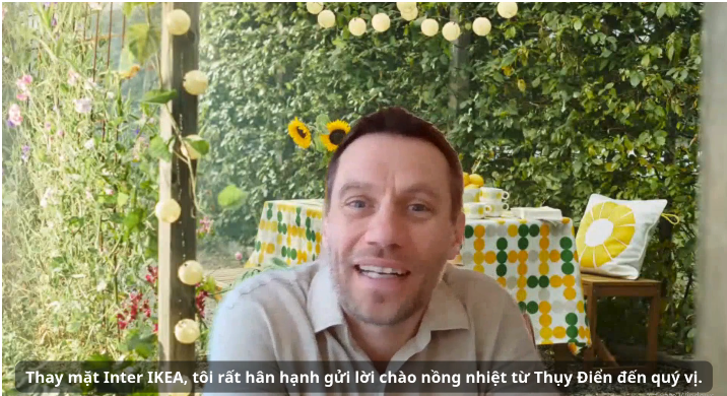
Mr. Christoph Leibing – Climate in Forest & Land Use Manager (IKEA)
|
|
At the project kick-off event, Mr. Eryk Dolinski highly appreciated the cooperation among international organizations, enterprises, and local communities in implementing sustainable large-timber plantation projects in the northern mountainous provinces of Vietnam. He affirmed IKEA’s long-term commitment to working alongside partners in Vietnam to promote sustainable forestry development, strengthen climate resilience, and create positive impacts for communities and the environment.
|
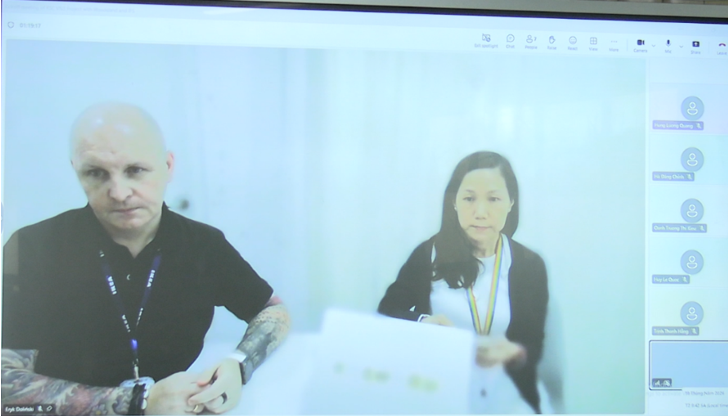
Mr. Eryk Dolinski –Business Development Manager, IKEA Vietnam
|
|
During the event, Mr. Le Quoc Huy introduced the overall objectives and implementation orientation of the RSC-VN3 Component. Accordingly, the project focuses on improving the quality and productivity of large-timber acacia plantations through the use of improved varieties and sustainable silvicultural practices; enhancing carbon sequestration and storage; promoting mixed-species forests with native trees; and improving the livelihoods of participating households.
.
|
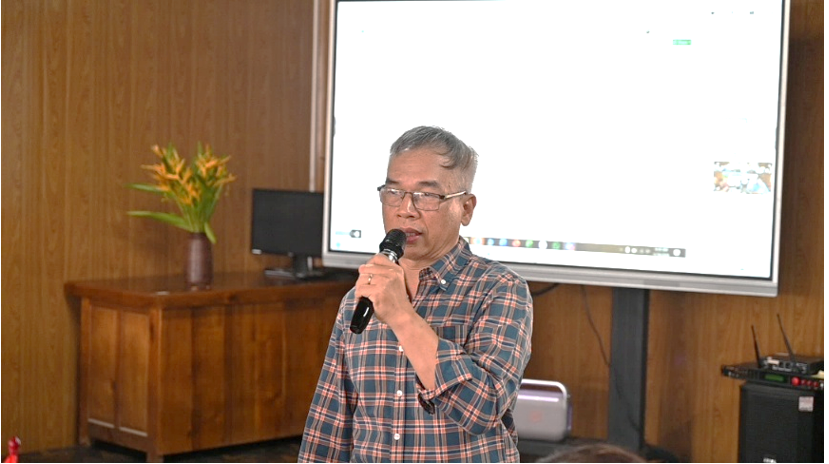
Mr. Le Quoc Huy – Removing and Storing Carbon Leader (IKEA)
|
At the event, representatives from localities expressed their consensus and commitment to close cooperation throughout the project implementation process.
|
Mr. Trieu Ho Quang, Chairman of Duc Luong Commune People’s Committee, stated that the project would open up important opportunities for local people to transition from short-rotation plantations to sustainable large-timber forestry, thereby improving economic efficiency and forest value.
.
|
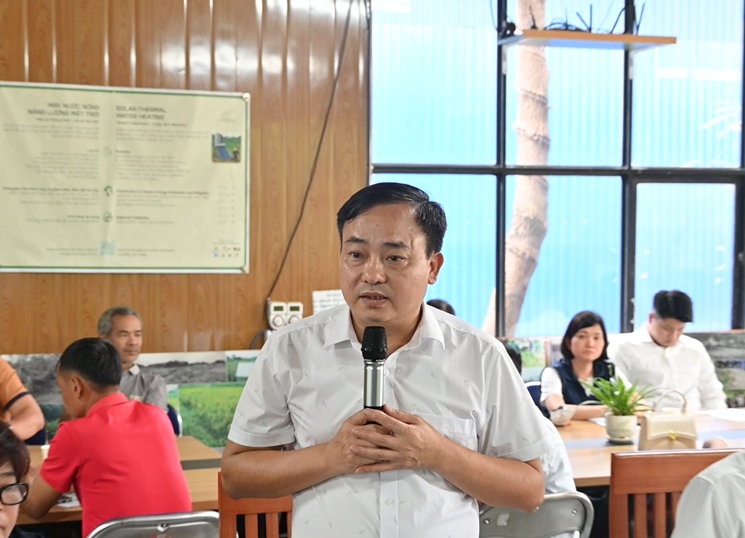
Mr. Trieu Ho Quang – Chairman of the People’s Committee of Duc Luong Commune
|
|
Mr. Nguyen Kim Chinh – Vice Chairman of Phu Lac Commune People’s Committee – highly appreciated the cooperation between scientific institutions, enterprises, and local authorities in supporting people’s access to improved seedlings, advanced forestry techniques, and sustainable forest management orientation.
|
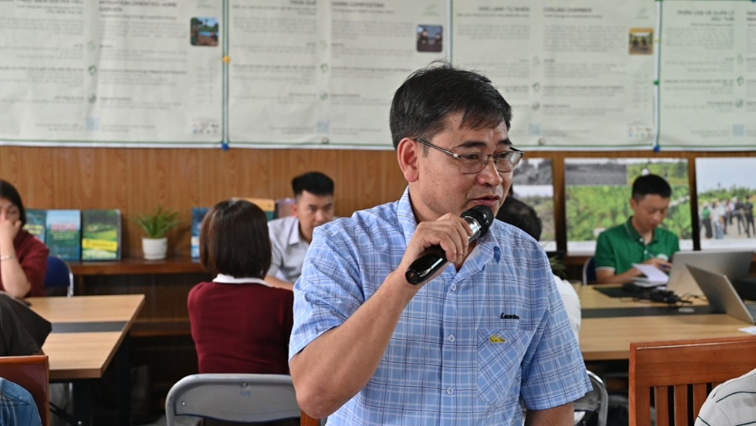
Mr. Nguyen Kim Chinh – Vice Chairman of the People’s Committee of Phu Lac Commune
|
|
Mr. Luu Dinh Bien – Deputy Head of the Economic Division of Thanh Mai Commune, a highland commune in Thai Nguyen Province participating in the large-timber plantation initiative, emphasized that this is a practical and meaningful plan to improve forest productivity, enhance local livelihoods, and raise community awareness of sustainable forest management associated with climate change adaptation.
|
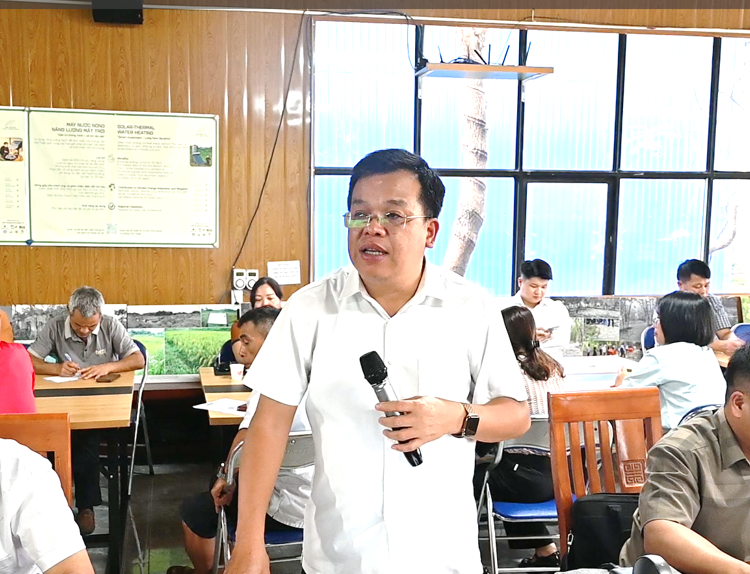
Mr. Luu Dinh Bien – Deputy Head of the Economic Division of Thanh Mai Commune
|
|
Representing participating households, Mr. Dinh Quang Trong from Phuc Tien Hamlet, Duc Luong Commune, shared his expectations about gaining access to high-quality seedlings and technical support for sustainable forest planting and management. He noted that this was the first time a comprehensive approach had been implemented, from analyzing the benefits of large-timber forestry to providing training and on-site implementation. According to him, the project offers an opportunity for local people to confidently invest in long-term large-timber forestry and improve economic returns from forest plantations.
|
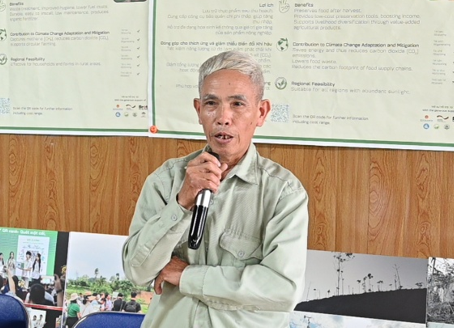
Mr. Dinh Quang Trong from Phuc Tien Village, Duc Luong Commune
|
Speaking at the event, Prof. Dr. Tran Thi Thu Ha emphasized the significance of the project in connecting scientists, businesses, and communities to build sustainable forestry development models based on value chains amid the increasingly severe impacts of climate change in the northern midland and mountainous regions of Vietnam.
|
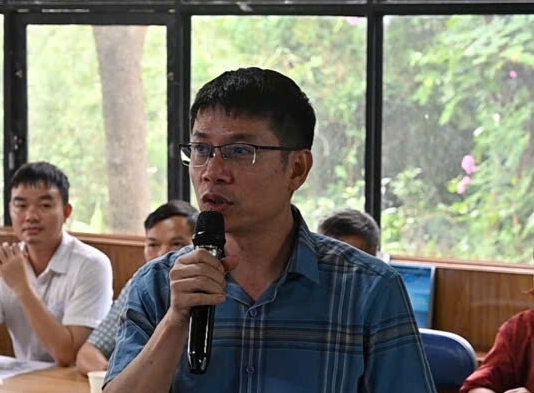
Mr. Ha Dang Chinh
Representative of Woodsland Tuyen Quang
|
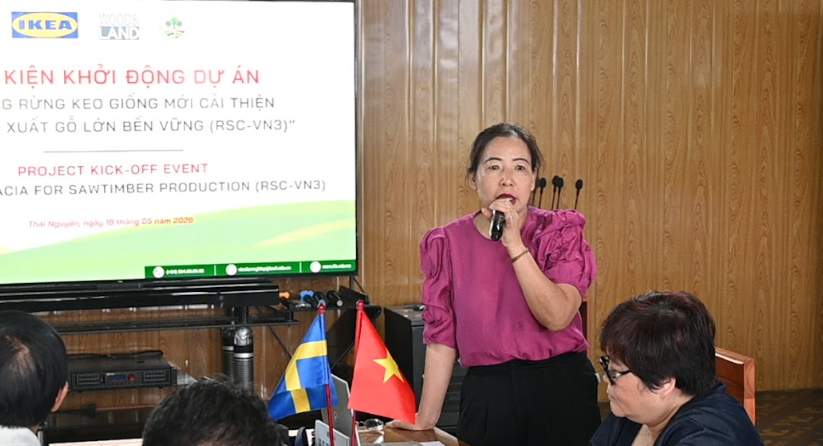
Prof.Dr. Tran Thi Thu Ha
Director of the Institute of Forestry and Sustainable Development
|
Within the event, delegates visited laboratories, nurseries, and FSC-certified plantation forest demontrations implemented by the Institute of Forestry and Sustainable Development. These activities enabled delegates and local people to directly learn about seedling production processes, forest planting techniques, and future directions for developing sustainable mixed-species forest models.
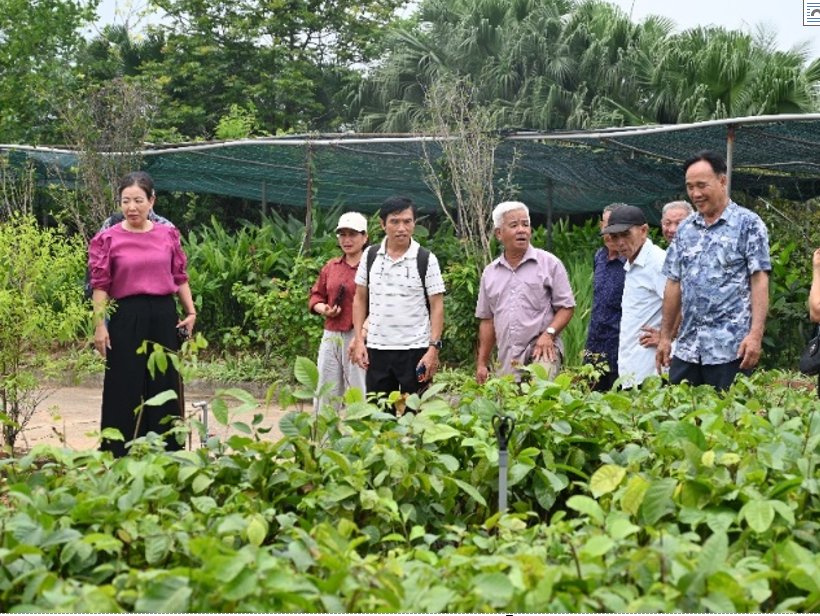
Visit to the native tree nursery
|
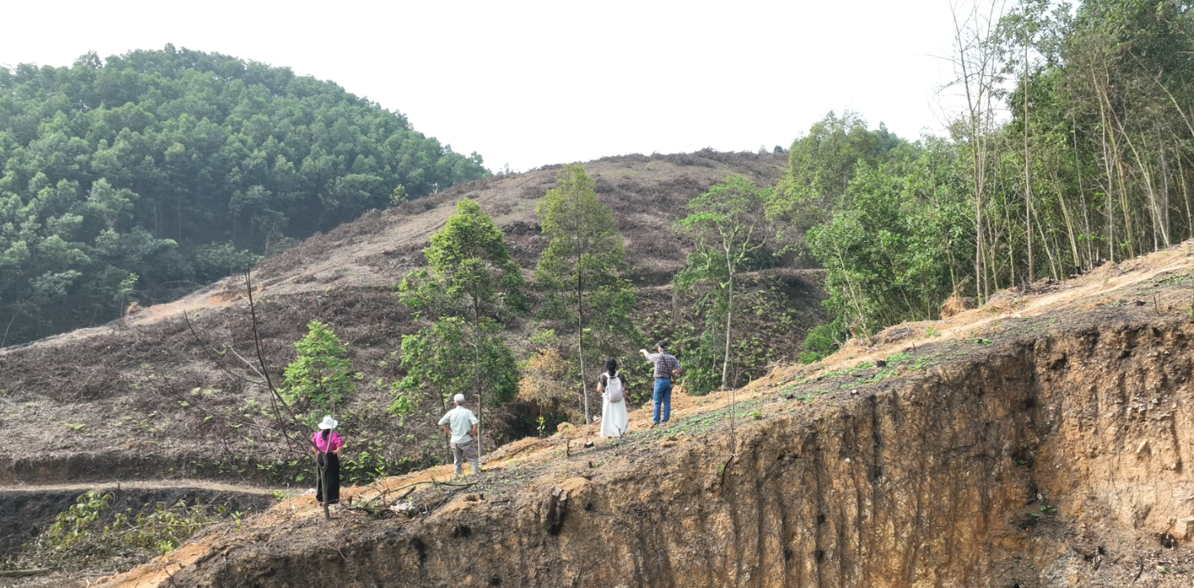
Visit to the forest plantation demontration in Duc Luong Commune
|
The launch of the RSC-VN3 Component marks an important milestone in long-term cooperation among stakeholders to develop sustainable plantation forest models, enhance the value of Vietnam’s forestry sector, increase carbon sequestration, and contribute positively to emission reduction goals, environmental protection, and community livelihood development.
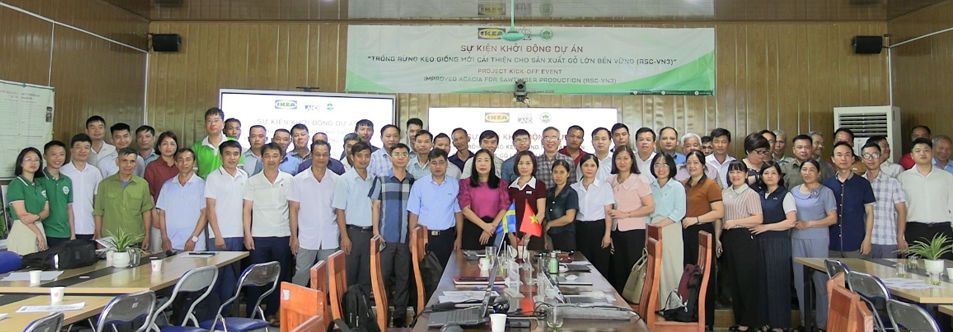
Group photo
|