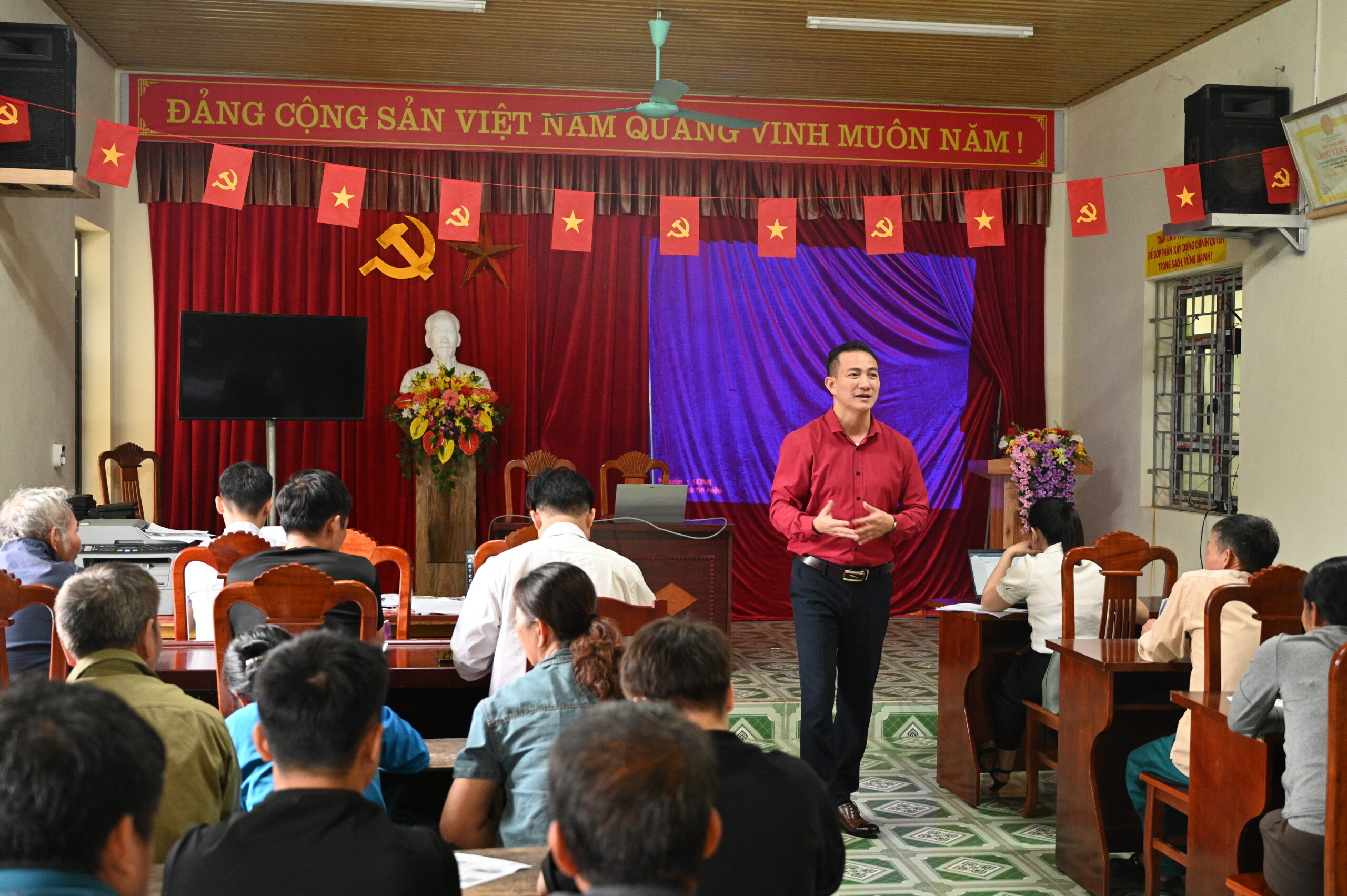
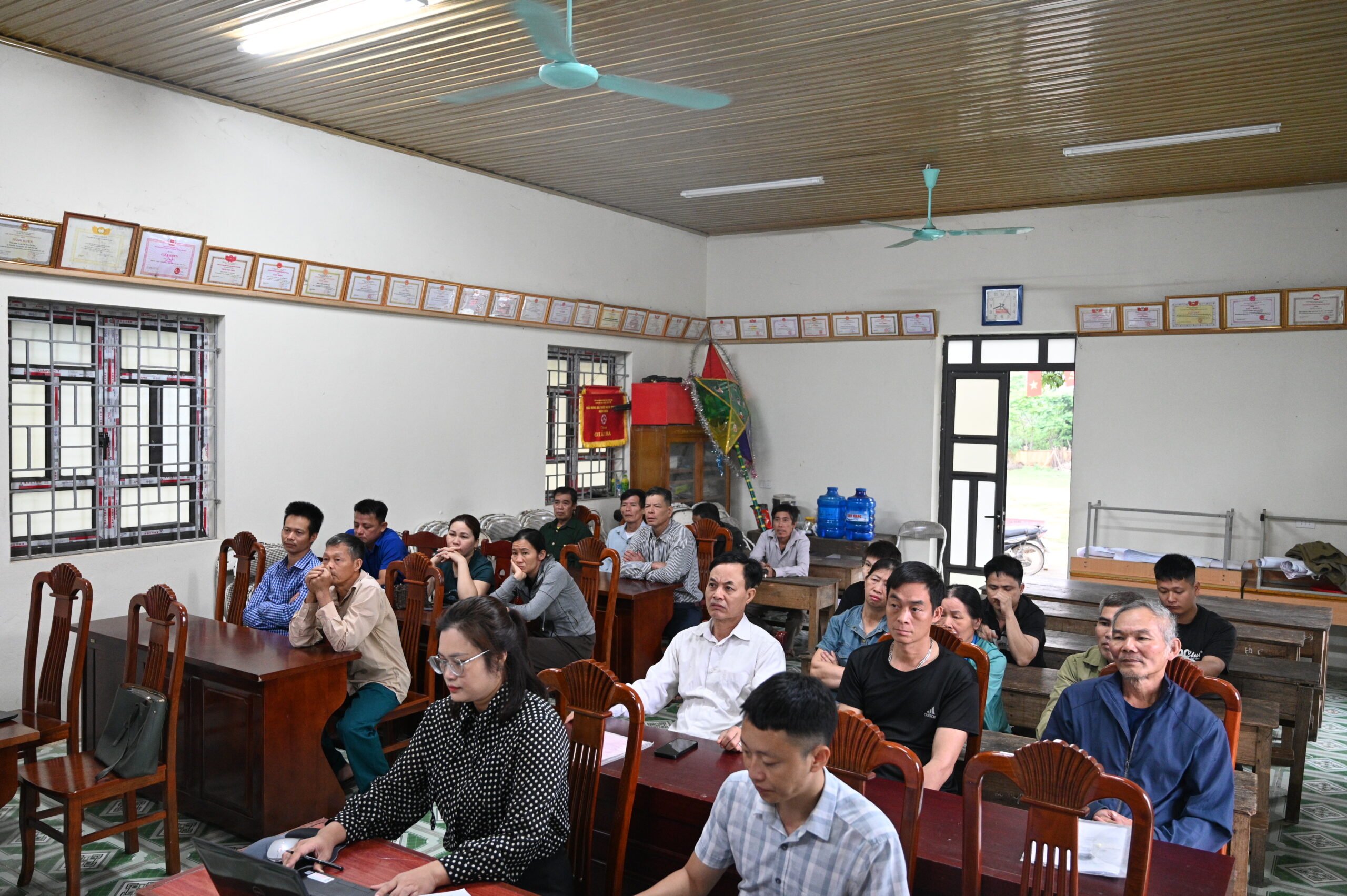
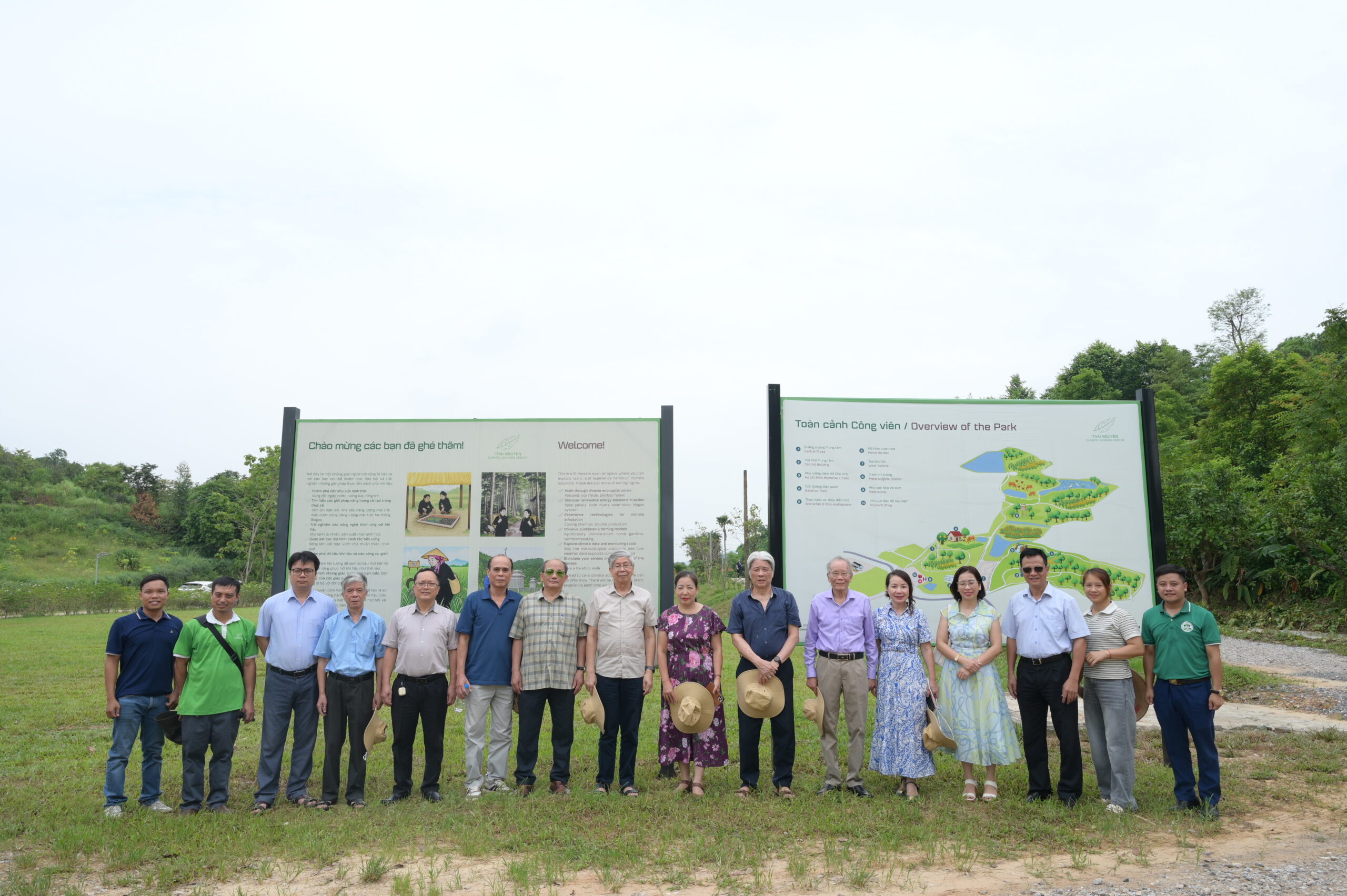
On April 23, 2026, at the Cultural House Hall of Dong Tien Hamlet, Thanh Thinh Commune, the Institute of Forestry and Sustainable Development, in collaboration with the local People’s Committee, organized a technical training session on forest plantation and signed contracts with local households participating in the project:
“Planting Acacia Timber Forests and Native Tree Species Adapted to Climate Change in Thai Nguyen Province Supported by IKEA – RSC Vietnam 3”.
Representing the local authorities were:
• Mr. Le Quang Huy – Vice Chairman of the People’s Committee of Thanh Thinh Commune
• Ms. Trieu Thi Thanh Hue – Specialist of the Commune Economic Office
Representing the Institute of Forestry and Sustainable Development were:
• Dr. Nguyen Cong Hoan – Lecturer and direct trainer for the technical session
• Dr. Le Anh Tu – Head of the Office of Science, Training, and International Cooperation
During the training session, local households received practical guidance on:
✅ Techniques for planting large-timber acacia forests using improved varieties
✅ Techniques for planting and caring for native tree species
✅ Thinning techniques for converting acacia plantations into large-timber forests
✅ Livelihood development associated with sustainable forest management
Following the training activities, the project also implemented the distribution of materials and supplies:
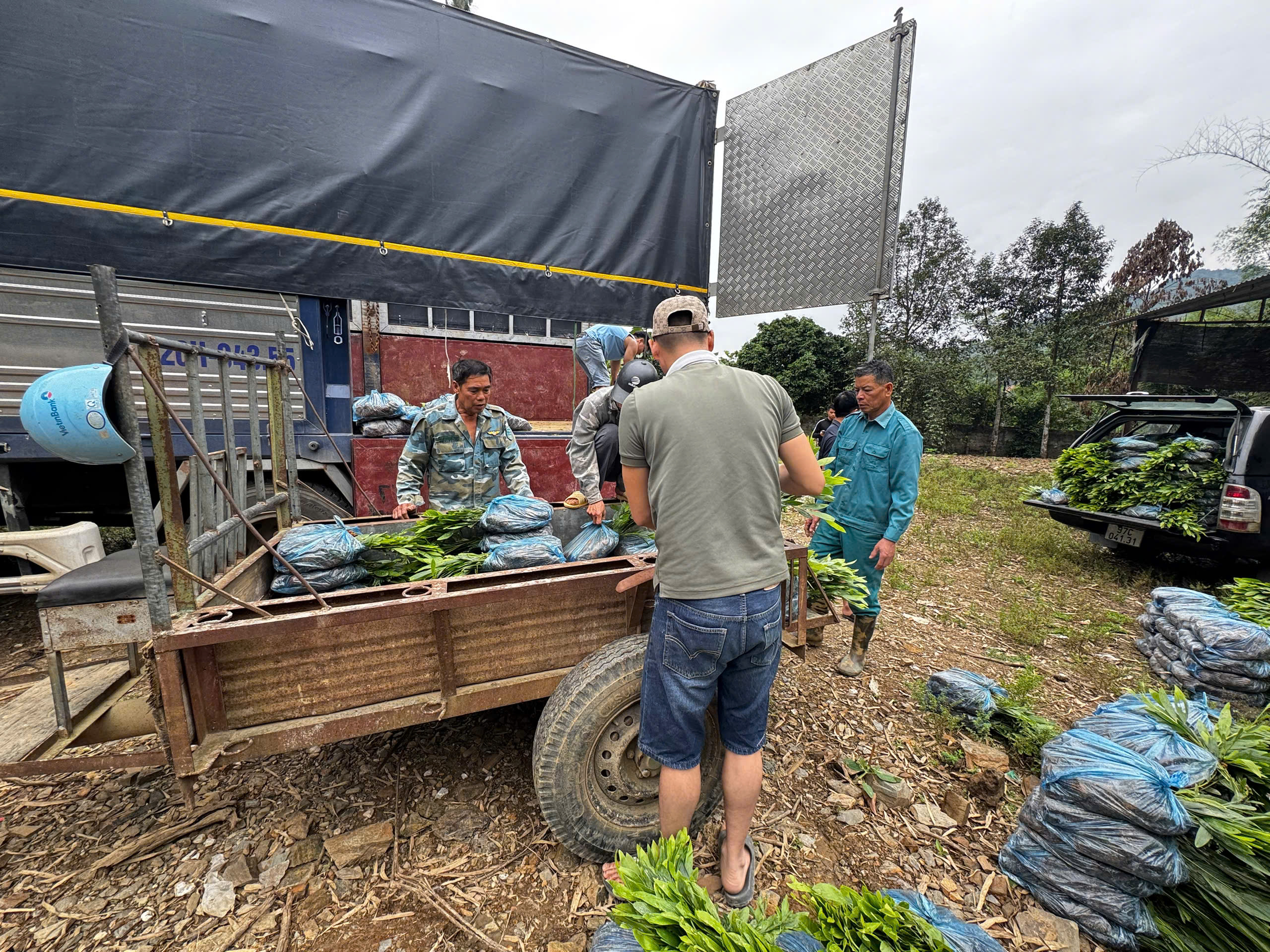
🌿 On April 24, 2026: Acacia mangium seedlings and fertilizers (Phase 1) were distributed to registered households.
🌿 For households choosing Acacia auriculiformis and tissue-cultured hybrid acacia varieties, distribution is expected to take place in early June 2026.
The distribution of seedlings and materials was carried out on schedule and in line with the planting season, creating favorable conditions for local households to effectively implement forest plantation activities.
The training and material distribution activities represent an important step in implementing the project in Thanh Thinh Commune, contributing to enhancing the value of planted forests, adapting to climate change, and improving sustainable livelihoods for local communities.