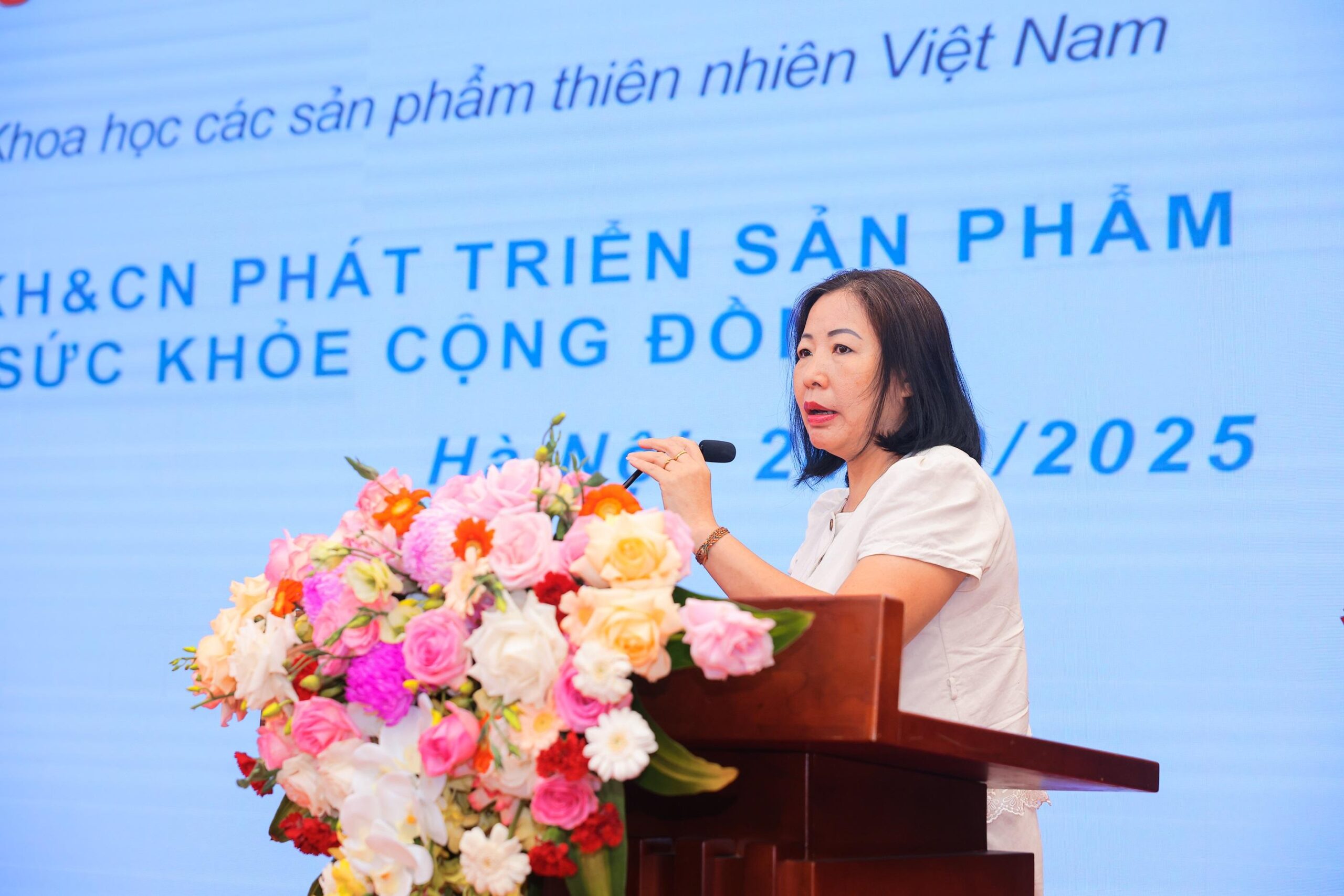
In the joyful atmosphere of welcoming the Lunar New Year 2026 (Year of the Horse), Prof. Dr. Tran Thi Thu Ha, Director of the Institute of Forestry and Sustainable Development and Vice President of the Vietnam Association of Natural Products (VANPS), shared her heartfelt reflections on the journey to unlock the potential of Vietnam’s forests and natural products. For her, spring is not only a renewal of nature, but also a moment to sow the “green seeds” of hope for a sustainable agriculture and forestry sector capable of reaching international standards.
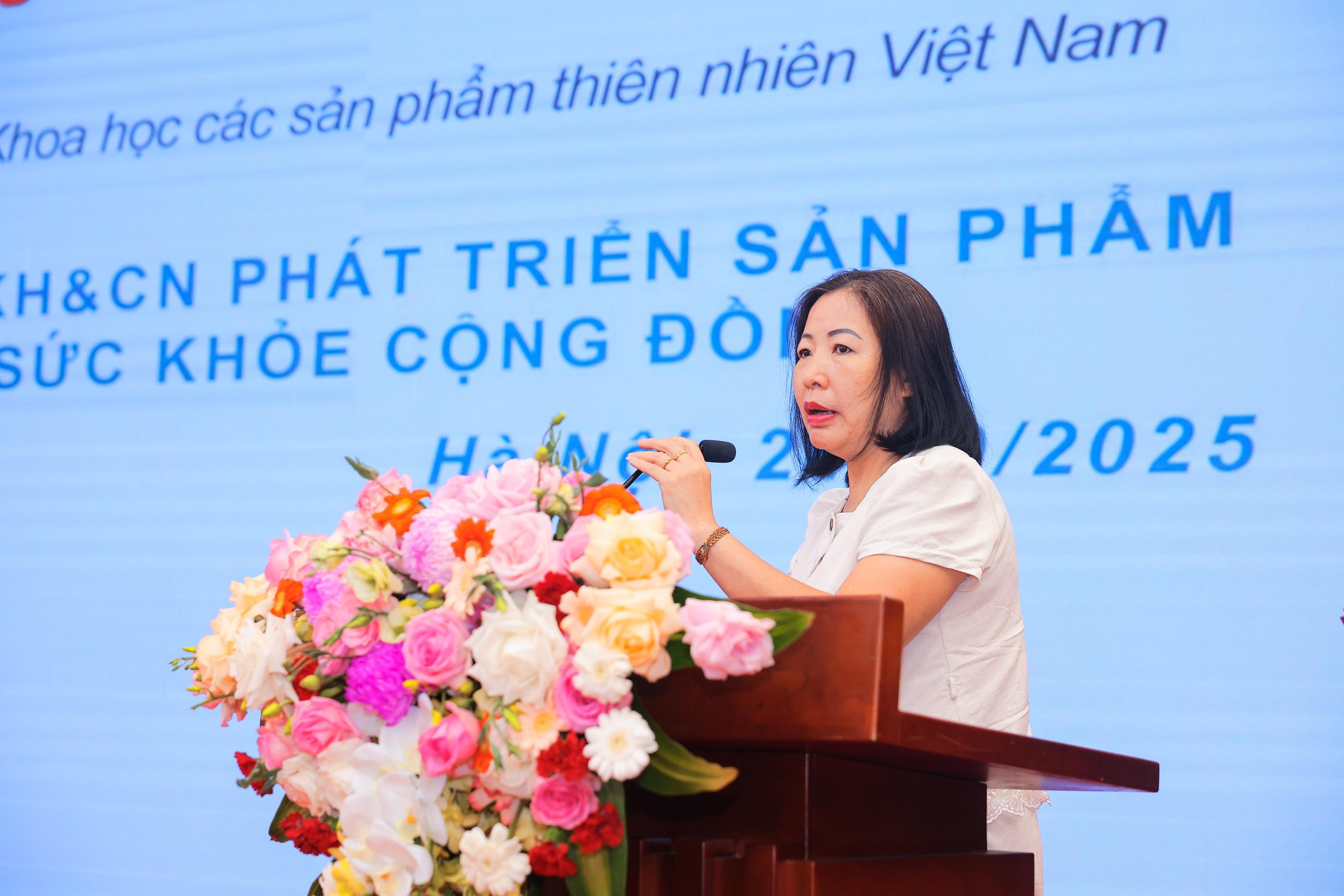
Resolving the Paradox of “Rich in Resources, Poor in Value”
Vietnam is one of the world’s 16 most biodiverse countries, with more than 5,000 medicinal plant species, yet its export value remains modest. In your view, how can the medicinal plant industry overcome the bottleneck of quality standardization (GACP/GMP) to transform its resource potential into real and sustainable economic value in the international market?
Prof. Dr. Tran Thi Thu Ha:
Vietnam is indeed among the countries with the highest levels of biodiversity worldwide, possessing over 5,000 medicinal plant species, many of which are rare and have high economic value. However, the primary bottleneck behind the modest export revenue lies not in resource availability, but in the value chain and the quality standardization system.
To convert biological potential into genuine and sustainable economic value, we must adopt a three-pillar strategic approach, in line with the National Strategy for Medicinal Plant Development to 2030, aimed at standardizing the value chain and accessing international markets.
First, medicinal plant products must be standardized according to GACP-WHO standards and linked to traceability. The industry needs to shift decisively from a “wild harvesting and gathering” model to one based on “cultivation and habitat management,” establishing concentrated raw material zones with coded and quality-controlled medicinal plants from seed selection, cultivation, to harvesting.
Second, product value must be enhanced through deep processing that meets GMP standards. Exporting raw medicinal materials generates low value and entails high risks. To access high-standard markets such as the EU, Japan, or North America, medicinal plants must undergo processing, active ingredient standardization, and biosafety control. This is the decisive step in transforming medicinal plants into bio-industrial products.
Third, the supply chain must be organized based on science and the State’s enabling role. Farmers cannot independently shoulder GACP certification, and businesses cannot independently bear GMP requirements. A linkage model is required in which enterprises lead the market, scientists certify quality, and the State provides institutional support and risk reduction mechanisms—fully aligned with the spirit of Resolution 57 on science, technology, and innovation.
In short, Vietnam does not lack medicinal resources; it lacks a science-driven and standardized value chain. If this bottleneck is resolved, medicinal plants can become a pillar of the bioeconomy—boosting export revenue, conserving biodiversity, and fostering sustainable livelihoods in mountainous regions.
Standardizing the Value Chain and Building “Digital Trust”
Given that current testing systems have yet to fully meet practical needs, consumer confidence remains limited, driving a preference for imported products. How important do you consider digital transformation and technologies such as e-COA and Blockchain in building trust and enabling Vietnamese medicinal products to dominate the domestic market?
Prof. Dr. Tran Thi Thu Ha:
Limitations in testing and traceability are among the strategic barriers that have partly eroded market confidence in Vietnamese medicinal products and constrained the industry’s sustainable development. In this context, digital transformation must be recognized as a core pillar of the national medicinal plant development strategy, rather than a standalone technical solution.
The application of technologies such as e-COA and Blockchain enables the establishment of a unified, transparent, and traceable quality data system across the entire value chain—from raw material sourcing, production, and testing to market distribution. This facilitates a shift from “subjective trust” to trust grounded in verifiable scientific data.

At a strategic level, e-COA and Blockchain not only help restore domestic consumer confidence, but also contribute to standardizing the domestic market, enhancing regulatory oversight capacity, and gradually meeting international market requirements. However, for these technologies to be truly effective, they must be implemented in parallel with the standardization of testing laboratory systems, the completion of legal frameworks on data and traceability, and the strengthening of the State’s leading role in building a shared digital infrastructure for the medicinal plant industry.
In summary, digital transformation—with e-COA and Blockchain at its core—is the strategic foundation for restructuring Vietnam’s medicinal plant industry toward transparency, high quality, and leveraging the domestic market as a springboard for long-term development.
Unlocking the Potential of “Green Gold” Beneath the Forest Canopy
The Government has introduced groundbreaking legal frameworks, such as Decree No. 183/2025/ND-CP allowing the cultivation of medicinal plants under forest canopy. In your opinion, which core technologies (e.g., supercritical fluid extraction, nanotechnology) should be prioritized for transfer, and what additional policy mechanisms are needed to promote large-scale production and create high value-added medicinal products?
Prof. Dr. Tran Thi Thu Ha:
The issuance of Decree No. 183/2025/ND-CP allowing medicinal plant cultivation under forest canopy not only expands production space, but also represents a strategic breakthrough in developing the medicinal plant industry along ecological, high-value, inclusive, and sustainable lines.
In practice, most of Vietnam’s rare and high-value medicinal plants are associated with high-altitude mountain herbs that naturally grow under forest canopy, where ethnic minority communities have long coexisted with forests. Allowing cultivation under forest canopy therefore leverages unique ecological and habitat advantages to produce medicinal plants with high concentrations and broad spectra of active compounds, while enabling local people to protect forests and develop sustainable livelihoods through controlled cultivation.
On this foundation, the industry should prioritize the transfer and mastery of core deep-processing technologies—first and foremost modern extraction and purification technologies (such as supercritical fluid extraction, selective extraction, and semi-finished product standardization), which enable impurity and toxin removal, biological activity control, and quality standardization. This should be followed by biotechnology and nanotechnology to enhance bioavailability, stability, and efficacy, thereby transforming under-canopy medicinal plants from raw materials into high value-added products.
Importantly, these technologies must be implemented in parallel with policies promoting traditional medicine and the integration of traditional and modern medicine. This would position Vietnamese medicinal plants as standardized raw materials for traditional medicines, herbal drugs, and functional foods. When medicinal products are strictly controlled in terms of quality, safety, and activity, they can be used as proactive healthcare solutions focused on prevention rather than treatment, thereby reducing pressure on the healthcare system.

The key to this model lies in the close integration of cultivation, processing, and medicine, where requirements for deep processing and medicinal use are “reverse-designed” from the earliest stages of seed selection, habitat organization, cultivation, and harvesting under forest canopy.
Regarding policy mechanisms, specific policies are needed for under-canopy medicinal plants, including investment incentives for deep-processing infrastructure linked to forest areas; public–private partnerships among enterprises, research institutes, traditional medicine facilities, and communities/forest owners; and policies on green credit, tax incentives, payment for forest environmental services, and commissioned research to reduce business risks and ensure equitable benefits for local communities.
In this model, the Ministry of Agriculture and Environment plays a leading role in planning and managing under-canopy medicinal cultivation areas in conjunction with forest protection and development; the Ministry of Health provides guidance on traditional medicine development, quality and safety standards, and commercialization pathways for medicinal products and functional foods; and the Ministry of Science and Technology leads research, technology transfer, and the mastery of core technologies. This coordinated approach will transform under-canopy medicinal plant cultivation into a modern forest-based economic model that enhances industry value while contributing to public healthcare and sustainable livelihoods for ethnic minority communities.
Reforming the “Triple Helix” Linkage for Dual Value Creation
The gap between laboratory research and large-scale production remains a challenge for many enterprises. In your view, how should the “Triple Helix” (Three-Party) linkage model be fundamentally reformed to not only commercialize technology successfully, but also support communities in transitioning from low-value forestry crops to high-value medicinal plants, achieving the “dual value” goal of economic development and sustainable forest protection?

Prof. Dr. Tran Thi Thu Ha:
To address the challenge of scaling laboratory results to industrial production, the Triple Helix collaboration model must be implemented in a substantive and effective manner. This requires clearly defined roles: the State establishes mechanisms and policies; research institutes and universities provide research outputs and innovations; and enterprises invest in production and commercialization.
The core focus of this collaboration is to support the advancement of Technology Readiness Levels (TRL) from research to industrial production, while creating regulatory sandboxes for testing advanced technologies.
When core technologies are successfully transferred and implemented within a legal framework such as Decree No. 183/2025/ND-CP, communities can gradually replace low-efficiency acacia plantations with high-value medicinal plants under forest canopy. This represents a solution to the “dual value” challenge—creating livelihoods and economic growth while protecting the environment and sustainably addressing climate change.
News & photos: Van Tue – Anh Minh
https://tieudung.thuonghieusanpham.vn/khat-vong-hoa-xanh-nen-kinh-te-va-niem-tin-cua-nguoi-lam-khoa-hoc-truoc-them-xuan-moi