After the war, Vietnam once again gained global recognition for its remarkable agricultural innovations, laying a strong foundation for the country’s development.

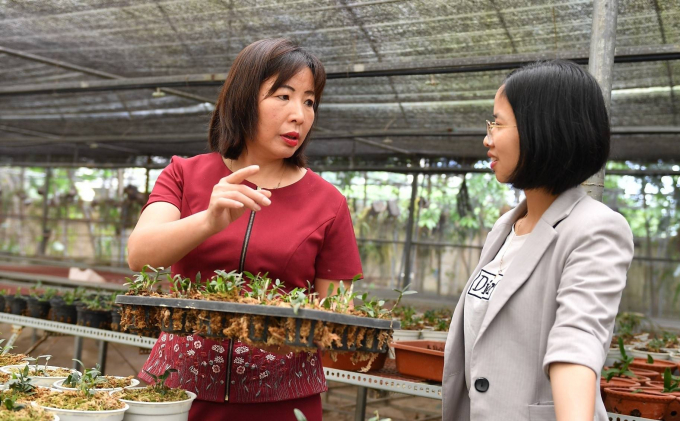
Associate Professor Dr. Tran Thi Thu Ha (left) believes that many Vietnamese agricultural scientists have successfully developed new plant varieties recognized worldwide, despite conducting research under resource-constrained conditions.
From a nation struggling with hunger and food shortages, Vietnam has become a country with abundant food supplies and a strong agricultural export sector. Amid the COVID-19 pandemic, agriculture once again proved to be an irreplaceable pillar that helped the country overcome economic difficulties.
Perhaps now is the right time to reflect and ask whether agricultural and forestry science in Vietnam has truly fulfilled its historical mission. If not, then why?
Vietnam possesses all the necessary conditions for developing a wide range of crops, livestock, and aquatic products, thanks to its unique geographical position and diverse climatic zones, including tropical, subtropical, and temperate regions.
However, compared to other countries with advanced agricultural industries such as Japan, Taiwan, Thailand, and Australia, Vietnam has yet to fully harness this potential. In many cases, agricultural products remain largely unprocessed for added value. This indicates that the field of agricultural science still has significant challenges to address.
A prime example is Professor Vo Tong Xuan, who successfully bred new rice varieties in the 1990s and 2000s that gained global recognition—despite working under limited research conditions. His success stemmed from his dedication, passion, and genuine desire to contribute to the industry.
Many opinions suggest that scientific research in Vietnam, including agriculture, has yet to meet expectations due to various obstacles, such as bureaucratic procedures and lack of funding. However, are these the root causes, or are there deeper issues that need to be addressed?