Scientific name: Amomum aromaticum Roxb.
Synonyms: Cardamomum aromaticum (Roxb.) Kuntze, Amomum tsaoko Crévost & Lemarié
Family: Zingiberaceae
Botanical Characteristics
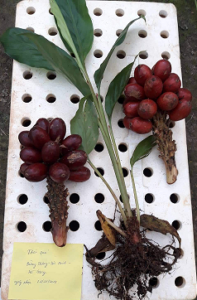
Cardamom is a perennial plant reaching 2–3 meters in height, with large, branched rhizomes forming dense clumps. The rhizome is aromatic, reddish in color, with multiple horizontal rings, covered with thin scales, and has a diameter of 2.5–4 cm.
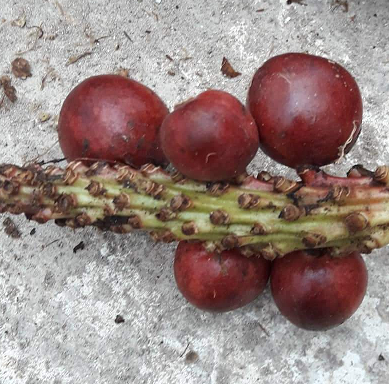
Inflorescences are spike-like, emerging from the base of the plant, 15–20 cm in length. Fruits grow in clusters, are ovoid in shape, purplish-red in color, with a diameter of 1.7–2 cm and a length of 2.2–2.7 cm, and have a terminal protrusion. Each fruit contains three locules. Seeds are brownish-yellow, enclosed in an aril, with a sweet, spicy aroma.
Ecological Adaptation and Distribution
Cardamom thrives in warm, humid, subtropical climates with average annual temperatures of 15–20°C, high rainfall, and high relative humidity. It is tolerant of snow and frost. Native to India, Nepal, southern China, and Cambodia. In Vietnam, it is distributed in mountainous provinces such as Lào Cai, Yên Bái, Lai Châu, Hà Giang, and Cao Bằng.
Medicinal Uses
Cardamom is used to support digestion, relieve neuralgia, and is applied in traditional remedies for gonorrhea, as an aphrodisiac, and for detoxification in cases of scorpion stings or snake bites. The seed oil is aromatic, digestive, and anti-inflammatory, sometimes applied to the eyelids to reduce swelling. In traditional Chinese medicine, it is used to treat coughs, chest pain with phlegm, abdominal cold pain, spleen deficiency with diarrhea, and malaria.
Propagation and Nursery Techniques
Propagation is carried out through rhizome division or tissue culture.
Planting Season
Cardamom is planted in two seasons:
-
Spring crop: January to April
-
Summer-autumn crop: June to September
The most favorable time is March.
Site Preparation and Land Management
-
Clearing: Vegetation should be cleared either entirely or locally using machetes and hoes.
-
Soil preparation: Localized soil preparation should be carried out at least 20–30 days before planting.
Fertilization Techniques
-
Basal fertilization: Apply 1 kg of well-rotted manure combined with 0.3 kg of bio-organic fertilizer per plant.
-
Top dressing: Twice per year, with 100 g of bio-organic fertilizer per hole each time.
-
Post-harvest care: After harvesting, apply 1–2 kg of well-decomposed manure and 0.3 kg of bio-organic fertilizer per plant.
Planting and Maintenance Techniques
-
Cultivation method: Cardamom can be intensively cultivated or intercropped under the canopy of natural or plantation forests.
-
Planting technique: For potted seedlings, remove the nursery bag, place the seedling upright in the hole, fill with soil, press gently to secure the base, and stake to keep the plant upright. The final soil level should be 4–5 cm above the hole. Maintain a distance of at least 0.7 m from the base of existing trees in the forest.
Care activities:
-
First round: Remove vines and weeds. Mound soil around the base of the plant (1.0–1.5 m diameter). Apply NPK fertilizer (5:10:5) at 0.1 kg per clump. Avoid damaging underground sprouts.
-
Second round: Remove weeds and vines again, prune old aerial stems, and apply 0.3 kg of bio-organic fertilizer or 0.5 kg of composted manure per clump to stimulate new shoot development.
Pest and Disease Management
Cardamom generally has few pest issues but may be affected by pests such as cutworms, armyworms, lady beetles, and snails. Regular monitoring is necessary for timely removal.
Protect against human and livestock disturbances.
Harvesting and Post-Harvest Handling
-
Harvest season: Typically harvested from the third year after planting, in spring or autumn.
-
Harvest method:
-
Collected fruits are placed in plastic or small bags, then transferred into sacks or baskets placed at the edge of the field.
-
Use scissors or knives to cut fruit clusters. In dense patches, older plants may be thinned to improve density and quality in future crops.
-
Harvest when fruits are mature (reddish-purple color) to ensure optimal quality and yield.
-
Early harvesting results in underdeveloped seeds, reducing quality by 30–40%.
-
-
Transportation: Clean all vehicles used to transport raw materials from the field to the processing site.
-
Do not use vehicles that carry fertilizers, pesticides, livestock, chemicals, or materials that could contaminate the medicinal product.
-
Avoid trampling or compacting the material during loading.
-
Unload immediately upon arrival to prevent spoilage from heat in fresh products.
-
Processing
-
Post-harvest cleaning: Remove debris and impurities from the harvested material.
-
Remove husks and bracts: Remove the outer bracts and separate the individual fruits in preparation for drying.
-
Drying:
-
Sun-dry cardamom on bamboo trays, straw mats, cement floors, or bricks. Spread in a thin layer and stir occasionally. Fruits dry after 3–4 sunny days.
-
Alternatively, use specialized herb dryers or tobacco drying kilns.
-
In homemade kilns, indirect heat drying is preferred to avoid scorching. Dry at 40–50°C.
-
Use woven bamboo shelves arranged in tiers, rotating their position every 4–5 hours to ensure uniform drying.
-
Packaging and Storage
-
Packaging: Dried cardamom is packed in two layers: an inner polyethylene or moisture-resistant paper bag and an outer jute sack.
-
Proper packaging quality depends in part on the materials used and the nature of the medicinal product.
-
-
Labeling: Each package must include:
-
Name of medicinal material: Cardamom (Amomum aromaticum Roxb.)
-
Net weight
-
Harvest location
-
Collector’s name (household representative)
-
Address (village, commune, district, province) / phone (if applicable)
-
Harvest date / drying-completion and packaging date (day/month/year)
-
-
Storage:
-
Store dried cardamom in sealed wooden boxes lined with moisture-resistant paper, each containing 25 kg.
-
Cardamom is highly hygroscopic, so controlling humidity is critical.
-
Store on shelves at least 50 cm off the ground in a cool, ventilated warehouse.
-
Periodically inspect for signs of moisture or mold; re-dry if needed to preserve quality.
-
Traceability and Documentation
Maintain a cultivation and processing journal that records harvesting, planting, care, and post-harvest handling.
All records should be noted on the packaging label or attached warehouse tags for full traceability.