1. Variety Description
Name: 
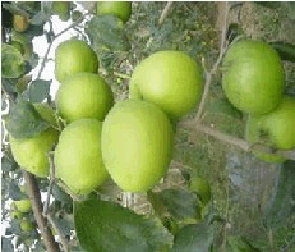
Tao Dai apple belongs to the Rhamnaceae family.
The apple trees currently sold at the center are grafted varieties, allowing them to bear fruit within 12–18 months after planting.
Characteristics:
-
Easy to grow and adaptable to all soil types.
-
High and stable yield, resistant to major pests and diseases.
-
If pruned early, the tree will bear fruit sooner the following year.
2. Planting Techniques
Planting Season and Spacing:
-
The main planting season is from February to April (spring). If early grafted seedlings are available, planting can begin in November.
-
In favorable spring weather, trees grow rapidly and will bear abundant fruit by year-end.
-
Recommended planting distance: 3–4 meters between trees.
Planting Holes and Basal Fertilization:
-
Hole size: 40x40x40 cm.
-
Fertilization per hole:
-
15–20 kg of well-decomposed manure
-
0.5 kg superphosphate
-
0.3 kg potassium
-
0.2 kg lime powder
-
-
Mix all fertilizers thoroughly with soil before filling the hole. Create a raised mound 20 cm above the ground surface (do not place the tree in direct contact with fertilizer).
-
If manure is unavailable, use 5–7 kg of bio-fertilizer per hole instead.
Planting Method:
-
Dig a small hole in the center of the mound.
-
Place the seedling at the same level as the mound’s surface.
-
Cover the roots with soil, compacting it around the base.
-
Apply a 2–3 cm thick layer of straw mulch around the base.
-
Water immediately with 2–3 scoops per tree (avoid watering if it rains).
3. Care and Fertilization
Watering:
-
In the first week, water once daily (morning or evening), using one bucket per tree.
-
After the first week, water every 2–3 days for one month.
-
As the tree matures, reduce watering frequency while maintaining soil moisture.
-
Apples require sufficient water during their growth phase. Drought conditions result in small, thick-skinned, and less flavorful fruit.
Fertilization Schedule:
-
Annually, after harvest and pruning, apply per tree:
-
30–50 kg of manure
-
5–8 kg superphosphate
-
3–5 kg potassium
-
0.5–1 kg urea
-
Pruning Techniques:
-
Proper pruning increases fruit yield and quality. Since apple fruiting branches grow from mother branches in the same year’s spring, pruning should encourage strong, high-yielding branches.
-
Light Pruning (Annual Maintenance):
-
Done yearly after harvesting to ensure stable and high fruit production.
-
-
Heavy Pruning (Canopy Formation):
-
Applied to young trees (1–3 years old) and older trees needing rejuvenation.
-
Cut back all branches, leaving only the base of three large branches from the previous year to form a productive canopy.
-
4. Pest and Disease Control
Common Diseases:
-
Root Rot and Trunk Cracking:
-
Symptoms: Sparse canopy, pale green leaves that fall prematurely, branches die back, and roots decay.
-
Prevention: Avoid excessive moisture around the root zone.
-
-
Branch Dieback (Colletotrichum cloeosporioides fungus):
-
Causes branch drying and death.
-
Affects mature fruits, causing soft rot.
-
Prolonged direct sunlight also contributes to this disease.
-
-
Fruit Skin Disease:
-
Fungal infection during fruit development causes small black spots that crack, reducing fruit quality and market value.
-
Prevention: Keep orchards well-ventilated, remove debris, and apply preventive fungicide sprays after fruit setting.
-
-
Powdery Mildew on Leaves:
-
Minimal impact as it occurs when the tree is already fruiting.
-
Best prevention: Delay grafting until after September and avoid early pruning, as young shoots emerging in temperatures below 20°C are prone to infection.
-
-
Fruit Rot:
-
Occurs in mature apples close to ripening, causing rapid decay (can affect all fruits on a tree within a week).
-
Common Pests:
-
Root-Feeding Insects:
-
Includes termites, grubs, crickets, ants, and especially mealybugs.
-
Found at soil depths of 0–50 cm.
-
Symptoms: Yellowing leaves, tree weakening, and potential death.
-
-
Stink Bugs:
-
Feed on young shoots and leaves, causing wilting.
-
Damage young fruits, leaving black spots and leading to fruit drop.
-
Weaken fruit quality and open entry points for fungal infections.
-
-
Stem and Branch Borers:
-
Common in apple orchards, causing tiny boreholes with white fungal dust around openings.
-
Found from mid-rainy season to early dry season.
-
Though small, these boreholes reduce growth, weaken branches, and increase breakage risk.
-
5. Harvesting
-
Apples are ready for harvest 2–3 months after flowering, when they reach full size, firm skin, and bright color.
-
Hand-pick carefully to avoid bruising during transport.